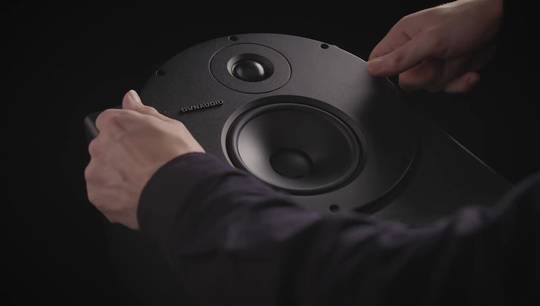
We are here
in the Dynaudio factory in Denmark
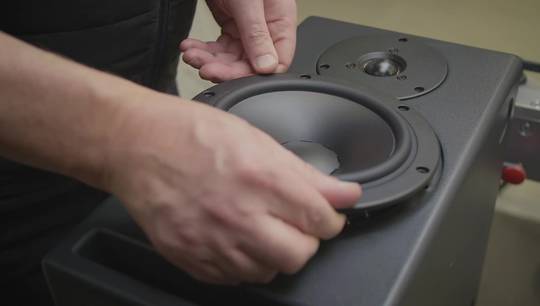
and this is where we do all our drivers,
final speakers and also where we produce
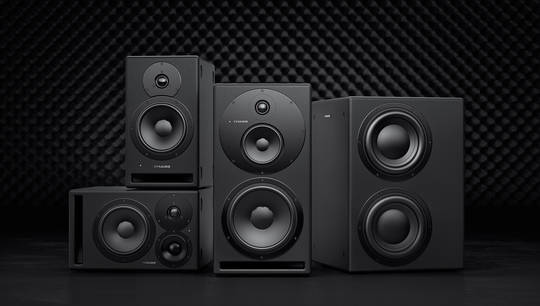
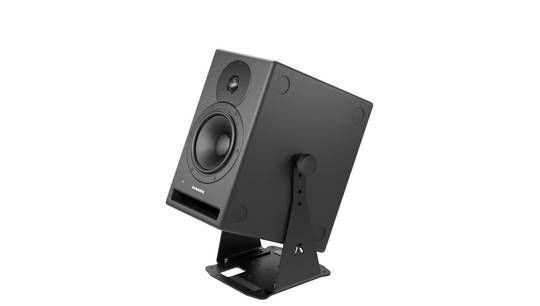
our new personal reference monitor
LYD.
In the end, we really work
everything inside the speaker
redefining how we make studio monitor.
With LYD, we looked at the whole history
of our acclaimed, BM range of speakers
and wanted to take it one-step further.
Our goal was to create
the best near field monitor
for musicians and producers sitting
in their small studios or home studios
and all that without blowing up the budget.
An important aspect of
Dynaudio speakers has always been
a consistent frequency response
and wide listening.
With the LYD series, we
wanted to produce a reference monitor
that sounds the same at any listening level.
So if you are listening
to the monitor at low volume
you have the same precise listening
experience as when you turn it up.
In addition, a more steady off
axis frequency response
creates a wider listening window.
So if you sit in front of the monitors
with two or more musicians
everybody can have
the same listening experience.
When it came to the features of the monitor,
we really didn’t want to do
the usual just because we always did it.
We thoroughly considered every feature
and thought about if it is useful or not.
For example, most
studio monitors use a shelf EQ
to adjust high and low frequencies.
But shelf EQs also introduce phase problems
so our engineers came up with a tilt filter
that tilts the whole frequency response
to one or the other direction.
Because it tilts the whole frequency
spectrum, we call it sound balance.
Another example is the bass cutoff.
In every speaker design,
you have to make a trade off
about how loud you want
the speaker to be able to play
and how deep it can play because
low frequencies use up so much energy.
So we give the users
the choice between three different settings
allowing them to adjust
the low frequency range to their needs
while also influencing
maximum sound pressure level.
When we talked to the existing
Dynaudio users, it became quite apparent
that a lot of times
it cannot be avoided that
the speakers
are positioned very close to a wall.
Therefore, we have
the wall setting which will introduce
filters that take care of anomalies
that happen in the low
frequency response of the monitor.
With these features,
it will be possible for everyone out there
to achieve the best
possible result with the LYD monitors.
And I believe it will help
artists and engineers out there
to achieve their perfect sound.
That is why we take great care
in building these monitors
here in our factory in Skanderborg Denmark.