When you make a commercial,
or really, any kind of film,
you have to be able to
grab the viewer's attention
within a very short period of time,
often seconds,
and in my opinion,
sound is the single most
important way to do that.
I think that the most common
argument, when making film,
is that sound and music is
51% of the final experience,
and I totally agree with that.
My name is Rasmus Pilgaard,
and I'm a film director
at M2Film in Denmark,
and for more than eight years
I have directed commercials
for some of our biggest clients.
M2Film is, by far,
the biggest high-end
production facility in Denmark.
Working with everything from
award-winning commercials
to 3D-animated TV series for
major international brands,
close to 300 people are employed at M2,
based in offices in Aarhus,
Copenhagen, Bangkok, and London.
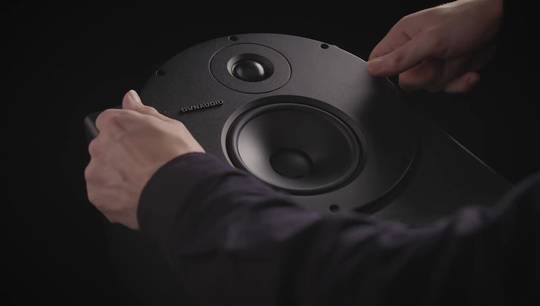
At M2Film, we've chosen Dynaudio speakers
because we believe that
it's the best in the market,
but also because
most of the external
studios that we work with
all have Dynaudio.
We bought our first set of
Dynaudio speakers 10 years ago,
a 5.1 surround setup with
AIR 6s and an AIR Base 12,
that we've installed in
our own sound studio.
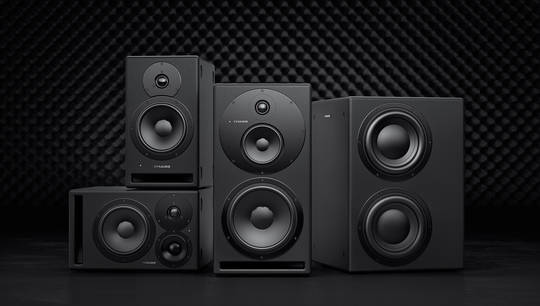
Today, we've added the entire range of LYD
throughout the company.
Our compositors, art directors, producers,
and post-producers have
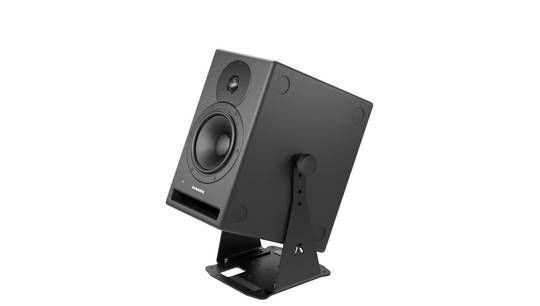
either LYD 8s or LYD 5s.
But while editing,
we actually do a fair
amount of sound design.
That's quite normal
to get a good feeling of the
flow and the pace of the film,
and the larger LYD 48s
are perfect for that.
It's a tool.
It's like when I'm working
with a color artist,
they will always have a lot of
different waveforms, scopes,
and even a very expensive
high-end video monitor
to tell them exactly what
they're doing, right or wrong.
You always have a very good feeling
about the direction you're
taking the look of the film,
but you need to be absolutely sure
that the white levels, black
levels, colors, and skin tones
are exactly where you want them,
and that's what the scopes, waveforms,
and video monitors will tell you.
It's the same with audio.
I need to be absolutely sure
that what I'm listening to in the edit,
the grading session, or even at home,
is the exact same sound image
as what we made in the sound studio.
We cannot control
the way our films are
viewed and listened to.
It could be on a great-looking screen
with amazing-sounding speakers,
but it's more likely to
be viewed on a flat screen
without external speakers,
a laptop, or even on a smartphone.
That's out of our control.
But what we can control
is the quality of both images and sound
when a film leave the building.
It has to live up to
the world-class standard
that we have here at M2Film.