Pro Audio
Studio masters: Greg Penny
251 views
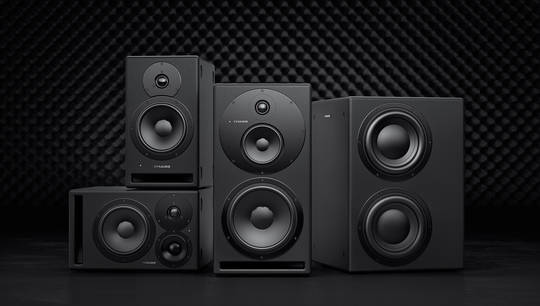
Greg Penny is embarking on a quest to bring immersive audio to the masses. And he’s assembled a serious studio to do it: a full Dynaudio Core system that can produce Dolby Atmos and Sony 360 Reality Audio. We took a trip to LA and were absolutely gobsmacked by how it sounds…
Read a little more about how Greg does what he does: https://dynaudio.com/magazine/2022/november/studio-masters-greg-penny
View transcript
For me, one of the tools that I really like is the Dolby Atmos Album Assembly tool. When doing immersive mixing, my objective is to emotionally impact the listener. And that’s why the loudspeaker experience to me is so important. So if you can create an emotionally moving experience with speakers in a space, then the machine goes away and what lingers in the mind of the person - it can be 10 seconds after the song or years to come - is that they’ve had this amazing emotional experience. That is what I’m after all the time. When you think about it, I’ve got 18 speakers pointed at my head. But I’ve had instances where I put up a super-busy track, it’s great because it’s super-busy, but when you break it apart and you try to make it a Atmos thing, it’s kind of like there’s too much going on. There are times when I’ve hit the wall and it doesn‘t work that well because every song can’t be as good as Rocket Man. It‘s Rocket Man that makes it that good. People will listen to it, but at the end of the day, they’re concentrating on the machine. On the mixes that I do I want people to lose all the things that attach them to the technology. There’s nothing that hits you over the head. it just grabs you and pulls you in. And it’s amazing. You know, most people put away their phone. They don’t talk. They will just completely be hypnotised. Some things probably shouldn’t be immersive. You know, the most impactful rock tracks are sort of when you get a sucker punch right in the face. And when you break that up and it has 20 individual elements it’s not as impactful. When you’re recreating a classic track, we have to honor the sound of that original record. We can’t drift too far from it because then it becomes another beast. I think we've started to figure it out now. Major labels provide us with the most current mastered version of a track. A high quality version of It. I’ll reflect back over several masterings to just see what brought us to this moment, and I’ll start to try to match the feel of that original track and the moment when you want to crack a beer and go, ‘Yes!’, is when you actually can surpass the emotional feeling of the one that is in the market right now. The stereo version. It could take you two hours or it could take you... a week! I have my own brand of the way that I mix. People look at my mixes sometimes now like, ‘Why aren’t there more moving balls?’ Psychoacoustically, what’s happening to people when they listen in immersive... Our brains are able to process all this information. We may turn certain aspects of that understanding off if it gets too complicated. But I think that it can fatigue the listener. Okay. So it’s sort of like if you come at the listener with too much information. Too many point-sources at once, too many moving point-sources, especially with important data, counter melodies and rhythmic things that normally we need to have anchored down. It can become almost... counter what it should be. I want to go a little further than the stereo mix. So I bring people into a new world, show them what they can experience. But I don’t want to go too far. My advice to... colleagues of mine who have wanted to get into immersive from stereo, is to just get your head around the the renderer. If you’re doing it, if you’re planning to do Atmos especially. You could overbuild very easily. So don’t let someone who doesn’t mix on a daily basis guide you into an expensive and complicated set up that you don’t need. Pay attention to simplicity. I really think that it can all get very heady and... And like, ‘Oh my God, I have ultimate possibilities. I’m going to use everything’, you know. And I’ve thrown everything at it a few times just to play with it. But for the most part, I think that you want like we talked about, you want the machine to go away. You want the listener to be completely transported into another alternative reality. Their headspace. And you want to serve the song. Because it’s the song at the end of the day. I have played Atmos mixes for people who are publicly known to be audio purists in the analogue sense. you know, really like, ‘I don’t make digital records’. Their minds are blown. And it was a happy experiment to try that, and have people give me feedback from that camp who had planted that flag and said: ‘I don't use Pro Tools, I use a tape machine’. And and so they’re looking at it like... Maybe there’s a difference. Maybe there’s a way they can express within that environment, you know, the immersive environment. It's quite a toolset. I mean, it is massive what you can do. So just... just be careful. I think there is such a thing as born to be immersive. I think there are starters and especially sort of digital natives who are going to come into it learning that they’re going to be born in an immersive audio environment and they’re going to adopt to that sensitivity. My younger son, who’s just turned 18, is totally... he totally rocks it. So he’s the digital native. For him, it’s like... it’s part of the toolset, you know, and he’s viewing it that way. And he’s a Logic guy, so he’s coming from that side of it. He wants to be able to create immersive from his basic Logic mixes. And you can do that. But I would say that anybody who wants to go into immersive should... Not cut their teeth on doing it on a laptop. Learn what it sounds like in a room. And then maybe if you’re... you know, if you have a situation where you can’t do it any other way than a laptop, then take that system into a room or take those files into a room when you’re done and play them back on a really good speaker system so that you’re sure that what you’re getting is what you’re getting. And certainly with speakers – and good speakers – that’s where it best happens. If you stick too much information in a little thing in your ear canals it’s just not the same, you know. Dimension-wise I think we’re good. We’re about the same available floor space as some of the more successful rooms. Obviously, the Penthouse at Abbey Road is oriented, you know, sideways. So this it’s wider than it is long. But this is sort of the size room that I would work in. So... There are two guys that I think of in terms of, you know, modern record making, however rootsy styles, right? Probably Jack White and Dan Auerbach, right? And I’m thinking that... If I were ever able to sort of show them what the capabilities of this were, that they would not like it because it’s digital it's sort of anti what they’re... where they’ve planted their flag. But I did have the opportunity one day by chance inside Capitol, to meet Dan while we were working on Atmos stuff and he said: ‘What are you guys doing?’ And I said: ‘Come on in and I’ll play you something’. And man, I’ve never seen such a smile break out on a face. When we were working on Goodbye Yellow Brick Road – the song –... And when that chorus came, he was... he lit up and he just went: ‘Wow, amazing!’. He was totally moved by it. And I think that’s the thing, you know, it’s that thing about... It’s the man and not the machine. It’s the song and not the whatever the pitch is. Or the hype or what, you know. It’s the artist. It’s the... You know, it’s... always something... that has a... a greater sort of spiritual ability to move you. And for me, that’s what I look for.