Unheard
Dynaudio Unheard Interview: Gurli Octavia
514 views
See Gurli Octavia record in the Dynaudio Unheard studio here: https://www.youtube.com/watch?v=Qi39VMeMeSM
Follow Us
► YouTube https://www.youtube.com/user/DynaudioOfficial?sub_confirmation=1
► Facebook https://www.facebook.com/DynaudioGroup
► Twitter https://twitter.com/dynaudio
► Instagram https://instagram.com/dynaudio/
► LinkedIn https://www.linkedin.com/company/dynaudio-as
Find a Dynaudio dealer http://www.dynaudio.com/find-dealer/
Visit http://www.dynaudio.com
View transcript
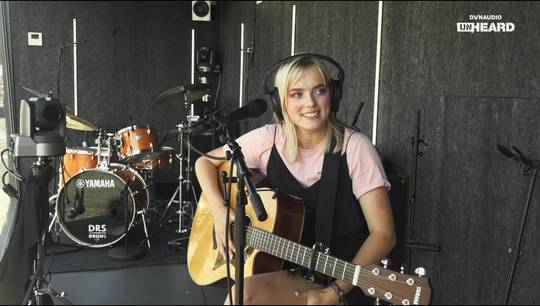
My name is Buster Kristensen. I play guitar in Gurli Octavia. My name is Elias Lykkeskov and I play keys. My name is Aksel Friis and I play bass. Hi, I am Gurli Octavia. Welcome to Dynaudio Unheard. My name is Christopher. I am your host. When you are born on the 8th of August, 1988, it's only natural to be named Octavia. She has traveled and been on the road with a circus, and now she is on the road with her music. I am here with Gurli Octavia who has been in our Dynaudio Unheard mobile studio. Tell us about the experience. How was it being in the studio? It was actually super cool. It was quite funny that you couldn't hear people outside. And you had kind of a weird monitor mix in your ears. But it was like everything fell into place. We got a bit delayed, but it went great. It was a really awesome experience. How does being on stage differ from being in the rehearsal room? There is a huge difference to the sounds coming out of the PA at rehearsal and the mix you have in your individual headphones. It's a rather strange experience and something you have to practice, so it becomes natural to play with that kind of sound. Cool. -Yeah. -Anyone else? -The window. -The window, yeah. -and all the people standing right outside. -Yeah. Many rehearsal rooms don't even have windows. So it wasn't... -Dark rooms. -Yeah, with mold and everything. I would like to go a bit back and talk about you. You grew up on the road. Your parents were part of, or connected to a circus that you moved around with. Could you tell us a bit about how your childhood was? Yeah. It was the kind of childhood... ...where... ...art, and artistic expression, and making alternative choices was the natural choice. Maybe what... It was not like they only... ...encourage me to do that, but they were also not against it. I was free and could choose... ...an artistic lifestyle. And I didn't have to argue with my parents whether or not to choose a formal education or high school. My choice was accepted. So you found accept and support in choosing your path? Yes, I think so. But there was also a pressure, because everyone was expressing themselves. I wasn't... ...the suburban hero or the person from the village... ...who was the only one singing. Everyone was doing it. So I also had to have something to offer in this environment. -So it was also... -So it was also competitive? No, I don't think so. Not at all. Maybe in my own head I was competing, because I wanted to live up to what everyone else had to offer. I also wanted to impress people. But it was not competitive. I feel like this environment encourages everyone to do what they are good at and also do what they aren't good at. You are allowed to express yourself. I think so. This open approach to expressing yourself, how is this present in your music? In terms of lyrics I think a lot about avoiding navel-gazing. I had a tendency to do that when I was younger. I think a lot about how to not only write about myself and my inner emotions. In terms of the music... What was it you asked about? I forgot. You had this life where you were on the road, and there was room to express yourself, and it was encouraged -Yeah. -to express yourself. So I would like to know, how this kind of upbringing is present in your music. Yeah, what I was about to say was correct. I just got thrown off track. I think... I think it's expressed because I don't feel... ...that... ...there is a right or wrong. I can feel that inside myself, but in terms of where I come from there is no right or wrong. That I... That it's not about being accomplished, or making it to the top of the chart, or having a single on the radio. It's about doing what you like doing and trusting what you have to offer is valuable to others. I don't know. To be able to live out your passion, right? Yes, but also to trust that you are doing something good for the world by doing what you are good at and have something to offer other people, instead of feeling like you are an intruder in the world. -That's what I am trying to do. -Cool. I would like to change subject and talk about... Here you can probably all contribute. At some point you are in the rehearsal room and you think, "Fuck, here it is. It's a good song." What do you feel when you reach this point? To me... I think... I think a lot about how the band experience it together. I can't have my eyes closed and think, "There it is". So in my experience you can feel it by looking at the others and get this feeling "wow, there it is". Otherwise I can use a long time figuring out whether it's there or not. It's much easier when you look at each other. -"There it is." -Yeah. Yeah. -It's true. -When everyone is like... -Yeah. -Yeah. Yeah, man. That's contagious. -Yes. -Anyone else? You feel the same? You look around and think, "That's groovy, that's cool?" With this band I feel we use a lot of time identifying each others way of playing. The more concerts we play the better the tracks become. You get used to listening to the tracks on different kind of monitors, you get used to listening to the tracks in different ways. There's a lot of things not being said when we play. There are some things you and I never talk about. I stop playing at a point because you start playing. There is a bunch of things you can work on at rehearsal, but it comes automatically the more you play and identify each others sounds. I do something, and Buster knows to hold off and the other way around. With this kind of music it's all about... I feel it's all about identifying each others way of playing. I don't play music, so it's a bit of an unknown world, but what you describe sounds like you get entangled in a way and sync with each other. Yes. That's actually it. And it's really... So when you play on a stage, I think it's pretty important to have eye contact, and we are getting better at sensing each other on stage. It's also about being aware of yourself and each other on stage. It's about what you feel inside, rather than playing the right notes. It means that the more hours you are at the rehearsal room the closer you get, right? Exactly, but you can rehearse all you want, but you learn a lot of things when you play live. What needs changing, what needs fine-tuning and so on. Yeah. You want to say something? I agree. Okay, let's jump to my next question. It's about... What has been the biggest surprise about the music industry? I don't know what the biggest surprise has been, but all the time spend in between the time you are on stage and play 25 minutes, like today, and all this time in between. You spend so much time to be able to be there for 25 minutes. Yeah, that surprised me a bit. When I started I was thinking, "I buy a guitar and we go perform." All of a sudden you need cable jacks. I didn't know what that was. And you need this and that, and suddenly you spend ten year doing... All this "in between". Is all this time worth it when you are finally on stage? Yes, it can be. And for this right here, I think, it's worth it. I played other gigs where it might not have been. There was this one gig we played that wasn't. There was that gig. But yeah, usually I think so. -Yeah. -For sure. Otherwise you wouldn't do it or keep on going. You'd probably stop. I am thinking about all the time where you plan, we are going there, we match our calendars, how do we get in? I just saw you come with all of your equipment, and you have to drag that around. -Yeah. -Yeah, and I think... You could have given us one advice when we were younger and let us know that there would be a lot a hassle. All the boring work versus the fun parts. And it surprised me, how many times I have thought, "Ah, there is a lot of other thing I would like to do." And thought, "Should I stop for a while? Just right now, and not play music for a while." And suddenly Gurli jumps in the door, or you have this one gig. And you are reminded why you play music. You can keep on getting this feeling, "Yeah, this is why I do it." -Yeah. -Funny you should mention this thing with giving yourself advice, because it leads me to my next question. Now you already answered this, but if you had to go back with your current experience, go back to when you first started and had to give yourself one advice that would make everything easier. What would that be? Perhaps it would be... Just to go back to what we are most surprised about. Because they are somehow connected. I was very surprised that everyone in the music industry are not assholes. And I think this is something you frequently hear from everyone. That everyone is evil, and it's a hard industry, and... Perhaps I entered the industry with a sort of reserved attitude. I kept meeting nice and helpful people who had a massive interest in music. Of course there are some people who are there for the money, but I haven't encountered them. So if I had to give myself an advice, I would say to trust that the majority of people in the industry are there because they love music. They are not there to screw you over. Maybe it's not the advice I would give myself, perhaps it would be unusable, but it just popped into my mind. -...you take it with you. -Yes. If you enter with that... Even me, who are not in the industry, I have heard all the stories of the tough industry. If you enter like that, you might pass up some opportunities. I believe assholes attract assholes. Assholes attract assholes. If you are an idiot you are a magnet to other idiots. If you act decent, others will too. -Your own energy will come back to you. -Yeah. -Yeah. -If I had to give myself an advice it would be to wait to enter the industry until you know for certain what you want to do. As soon as you enter the industry a lot of people have an opinion about what you should be doing in regard to everything. Not only how you should look and sound, but every single decision. If you are not sure about who you are, it's disrupting, and you'll start doing 10,000 different things at once and loose yourself. And I believe that everyone who are doing their thing will end up where they are suppose to. Just do your own thing. Defend what you're good at. Defend what you're good at, little child! Thanks. Well, try to think about it. If I had to give myself an advice, I think... ...it would be, when you play a lot of music you also take lessons. At least a lot of people do. You have to embrace these lessons, but remember how important it is to do the things you find cool, and not just do what your teacher finds cool, and feel pressured to find that cool as well. They graduated 30 years ago, right? So what do they know about anything? We are the people shaping music right now. So we know more than them. So use what you can from these lessons, but also do what you want to do. Listen to the kind of music you want to. There is no such thing as bad taste. Just listen to what you want to, and don't feel ashamed. I think that's it. So even though I talked about all the "in between" time, remember to enjoy it as well. Because that's the greatest thing. It's great to drive back home at 2 am, drunk, with your friends, and everything "in between" this. It's also a part of it. It's great. It can be hard, but also great. And practice your autograph. Because at one point you'll get asked to write it on a wall, over there. Yeah. That's probably it. And with the little introduction to Puke Wolf in the mobile studio. Thank you so much for coming. Great that you were able to be here and... Remember to look up Gurli Octavia on You Tube and Spotify, and now you have a track. We'll have Puke Wolf in the studio in about an hour. Stay tuned. See you later.