Home Audio
Creating Confidence 20A
143 views
Dynaudio Confidence 20A - Behind the scenes of the creation of our active high-end standmounter.
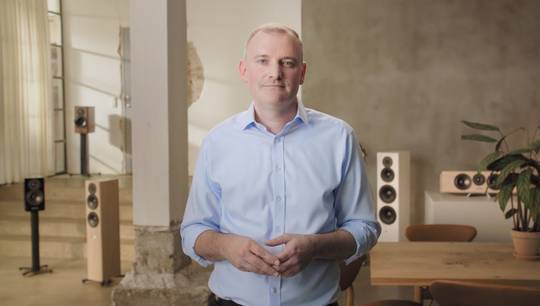
Last year our Product Management, Industrial Design, and R&D teams were tasked with a challenge: to take the company's flagship passive standmount speaker and create a worthy active version of that same beloved model. In taking on this challenge, they not only succeeded, but at the same time, created a new standard for compact speaker performance in general.
In this short film we hear from the people who faced this challenge. And won. This is the story of Dynaudio Confidence 20A.
Learn more about Dynaudio Confidence 20A: https://dynaud.io/3HygHl3
Find a Dynaudio dealer https://dynaud.io/4mV2ptI
Visit Dynaudio.com https://dynaud.io/4oJzavP
Follow us
► YouTube https://dynaud.io/474OUTC
► Facebook https://dynaud.io/4mZYsnH
► Instagram https://dynaud.io/4mZnAuS
► LinkedIn https://dynaud.io/4mue8Qh
► TikTok https://dynaud.io/4mYqfop
View transcript
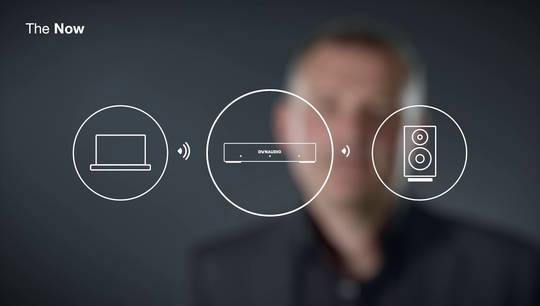
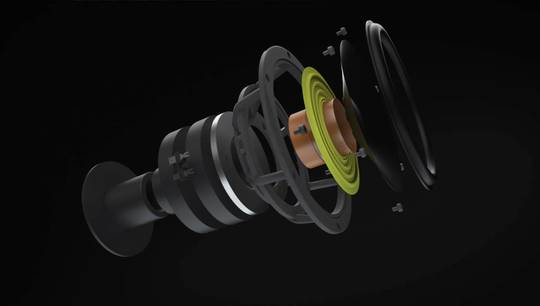
What if we could take the top of our passive products and combine that with our professional, active studio monitors, the technology from those? Could we then create a loudspeaker, a high-end system that would appeal to the more aesthetically conscious? Well, the premises was to, of course, turn a passive speaker into an active version. How to ensure that everything looked integrated and was part of a whole. Well, let's start off with what an active speaker is, because there's often a misunderstanding of what an active speaker is. In 2022, we launched our Focus Range, three speakers that are, you could say, all-in-one speakers. You can just pull out your phone and then you can stream directly to the speaker. There's nothing else you need to do. With the Confidence 20A, we are stepping up a notch. And then we thought, well, then we leave the choice of source to the preferences of the customers. So all you have to do with this product, if you want to keep it simplistic, is to choose a streamer to your likings, connect it to the speaker, and then you have a system. In the hi-fi world, there's always been this battle between passive and active speakers and what's the best approach to have. There's not one right or one wrong answer to that. But definitely, when you go active, you have full control of the speaker. So one of the challenges we gave our engineers with this project was to push the Confidence 20 to its absolute top-notch performance we could push out of this speaker. Well, first of all, the Confidence 20 is an already existing speaker in the Dynaudio catalog. And to make such a speaker into an active variant has been a very large challenge, indeed. And that meant we had to go a couple of ways to approach this. Because an active speaker, you need to have an amplifier module with him somewhere. Active speaker means that the crossover is done actively. So it's done with small signals and electronics. And that can either be DSP or with analog filters. And DSPs give you a lot more flexibility to easily change things. But also come with drawbacks that it's a DSP. And there's a bit more conversion that you have to think about and do properly. But when you meet those challenges well, you get a very flexible, very high-performing product. And with the Confidence 20 A, we've gone for an active loudspeaker and tried to improve upon the already pretty good passive speaker. Because of acoustical needs for the speaker itself, it could not be placed within the cabinet. So where can we actually place this end? So the premise of designing the Confidence 20 active was to figure out how to integrate all the technical parts into a stand. Because we from the start knew that we couldn't put it into the cabinet. Because that would compromise with the sound in the speaker itself. We couldn't actually replace the speaker stand itself. So we had to work with what we got already. We have a quality in our sound that has to be kept. Especially in this kind of range of speaker. What we basically had was an already existing stand. From the start, our hardware software team had already considered a solution. to the stand. Which we have to work around when it comes to implementing the amplifier. When we try to design the stand in a more aesthetically pleasing way. One of the main advantages with the active speaker is this being able to push the speaker lower than you would expect for a passive speaker of the same size. And we can do that because we're in control of everything. When you're in complete control of the system means you can tailor things better. You can tailor things better. So you can tune the box lower. And you'll sacrifice sensitivity in the loudspeaker by doing that. But you have a DSP and you have an amplifier. So you can compensate for that. By boosting the response. But all of these things it's finding the right balance of how far can you push it. And how much are you sacrificing. And you can do that. And you can do that. And you can get pretty good. Better than pretty good results. When you do this in the right way. The target group that we had in mind with this speaker. Design is very important. Design is absolutely as important as the performance of the speaker. And that was why we actually chose the Confidence 20 from the beginning. Because it's a nice design. It's not obtrusive in any way. And we only made very subtle changes to that speaker design to make it active. So actually the visual changes we have made are very minimal. Our main strive was to make it look like the stand was born with this from the beginning. Because we wanted to ensure that everything looked integrated and was part of a whole. We worked a lot with how to integrate the knobs in the connectors on the backside. All the controls and the connections and so on. They are hidden on the back of the speaker. Because that's only something that you set up once you install the speaker. Then you connect it. You adjust the settings to adapt to the room and to your personal preferences sound wise. And then you're good to go. You don't need to touch it anymore. If you want to go more sophisticated. You can also choose a preamp and connect for instance a record player. All the sources you normally would have in a complex hi-fi system. So you can also go in that direction. But you can keep it simple and just have one source on the system. It's very much Dinaudio. It's very much Dinaudio. The sound. That's something we are always trying to push for with all our speakers. Whether it's our entry level emit speakers or our flagship Confidence 60. We need to have Dinaudio performance. So that's first and foremost. And when we think about the Active 20. It sounds like a bigger speaker than it is. We can. Like I said. We've been able to push the bass lower because it's active. And then that just affords us a bit more freedom. With the filter shapes and filter topologies that we can apply in an active speaker. Without losing the qualities that make a really good passive speaker. A really good passive speaker. The comment we've had from people listening to the Confidence 20A for the first time. They are very much surprised about the performance of this speaker. They feel they are listening to a much, much bigger speaker. It was not the intention from the beginning to make it sound like a much bigger speaker. But that's just a consequence of making everything dedicated. A dedicated amplifier to the woofer. A dedicated amplifier to the tweeter. And push them to the maximum. And that just gives you control. When you have that control of the speaker. You can push it to its absolute maximum. So it's like a bigger Confidence 20. And better. If we're allowed to say it. We've gained so much knowledge from working with active loudspeakers. From way back and up till today. And all that knowledge we have gained. Of course we will utilize that. Just from the pure performance gain that you achieve by adding amplification and having the control of the entire speaker. We will not give up passive speaker. We will not give up passive speakers. That's still a big part of the market. But there are definitely advantages of making a speaker active. Not to talk about the simplicity of the system you get compared to creating a full system with passive speakers, cables, amplifiers, sources and so on. So this more simplistic approach is something that we see appeal to more and more customers. Will Dynaudio make more active speakers in the future? Absolutely. Thank you.