Home Audio
Dynaudio Focus Deep Dive | A conversation about Focus
234 views
Become acquainted with the Dynaudio Focus family: https://www.dynaudio.com/home-audio/f...
Follow Us
► YouTube / dynaudio
► Facebook https://www.facebook.com/DynaudioGroup
► Twitter https://twitter.com/dynaudio
► Instagram https://instagram.com/dynaudio/
► LinkedIn https://www.linkedin.com/company/dyna...
Find a Dynaudio dealer: http://www.dynaudio.com/find-dealer/
Visit Dynaudio: http://www.dynaudio.com
#DyanudioHome #DynaudioFocus
View transcript
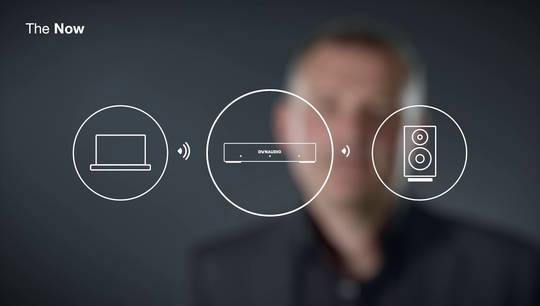
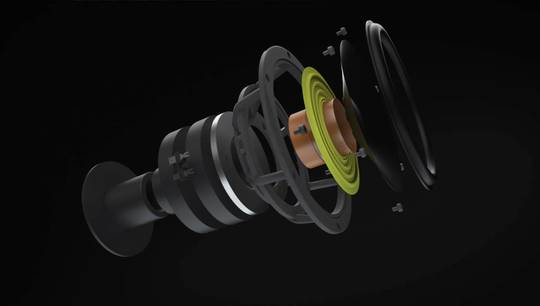
I’m Stephen Entwistle, Chief engineer for Acoustics at Dynaudio. Jens Lynge Petersen, take one. We’re doing it in English, right? My name is Jens Lynge Petersen, and I’m the CTO here in Skanderborg, Dynaudio. I’m Otto Jorgensen, I work at Dynaudio Academy, and I was involved in developing the new Focus from Day One. Technology wise we are looking at maybe the most complex speaker that Dynaudio has ever made. Here we are talking a full blown streaming machine, that can do almost everything that is on the market today. The majority of the development went into working on the user experience, actually. The app control, the interaction with all the different streaming services. The interconnection between the loudspeakers. That’s where the bulk of the development has been. That’s been the electronics hardware/software team working very, very hard to build on that platform. The new Focus is a series of wireless, active speakers where we combine the studio grade performance of our legendary drivers, easy-to-use, very advanced streaming – we use the best platform for streaming in the world. I took over this project back in 2019 when I arrived into the R&D in my job as it is now. And at that time we did a, shall we say… review of everything that was started. We actually reviewed everything, turned and – should we say – measured and also corrected where we thought that would be adequate to do that. Basically, I thought that the price that we are going to set this speaker to, it also has to come with... with a better than a market standard setup. Feature-wise. There is not a real – should we say – tough competitor to this speaker. So I think we have a unique speaker here. We’ve kind of rested on our laurels a little bit. You know, we’ve won some good awards with our older products. We’ve had some very well performing products. And what we’ve tried to do with Focus is getting back to that class leading performance. And we do that by caring about everything that we put into the loudspeaker. Now we’re going to set a standard. We have to take it from there again the next two, three, four, five years we have to develop even more. Adapt even more new technology. That’s going to be tough for us, because it’s really a streaming monster. It can do all kinds of things. Basically, the premise was that we would take the existing Focus XD. Where are the significant performance gains to be had? The new Focus is basically designed for anyone, who wants that high level of performance but not necessarily all the hassle of a full, traditional hi-fi system. So the new Focus is a system, that’s easy to set up, easy to start to use. And once it’s set up and running, you just simply connect to it, and start playing your music. You can use just as easy as any wireless system, but you get the performance, that you’d expect from a Dynaudio speaker. Dynaudio sound... that we cannot question. So that is a must. It just have to sound as one of the best speakers in the world. So that’s given. Technology wise we are looking at maybe the most complex speaker that Dynaudio has ever made. Looking into the motor and the whole feature setup, we needed to also there be over-competible with the rest of the best. It is a high end, hi-fi speaker that are able to connect to each other in a hi-fi setup via the WiSA technology, which is new. We have built in all streaming features: Spotify Connect, Tidal Connect. We have the newest technology based on Stream Unlimited modules. We have the best amplifiers from Pascal. We have... an architecture that is upgradable, coming with Dirac and other good stuff. The new Focus is build with versatility in mind. You can basically use whatever source, you have. Whether you prefer steaming, a CD player, or if you have a vinyl collection, you can connect a record player and again have that very high level of performance, whether or not, it’s an analogue or digital source. We really took care of the signal path, to make sure that we have the absolute best performance. No matter what the source is. We’ve got a very good, stable platform for streaming, connectivity and user experience that still delivers a significant upgrade on our existing acoustic performance of the Focus XD. On the acoustic side, it’s been, well, how do we... How do we show off, what we can do? So we’ve been quite heavily involved in selecting the analogue to digital converters, the digital to analogue converters, the gain staging, the power amplifier selection. Looking at all those kind of key parts, that go into the sound of the loudspeaker. And really optimising that for best sound performance. I think all these different types of streaming and how to take music from a phone or whatever app, you’re using to a loudspeaker, that has become commonplace today. So this is something everyone can do, with all types of speakers. But it’s not very common to do that, and get the actual performance of what it was like to listen that music in the studio. This is what I really think the new Focus can do. So it takes that quality of performance the way we would like people to hear the music, and puts that into a package, that everyone can use. And it’s a very simple to use in your everyday life. We did a new method of managing the bass performance where we extend the range of the performance of the closed box cabinet with the DSP So what we’ve done with the rest of the range is we’ve applied that closed box principle, and the bass-extension principle to the whole range, so... All the speakers go much lower than they would if they were a passive cabinet. And we can do that because of the power amplifier that we’ve got, and the DSP that we’ve got, and the fact that we’ve full control of the electro-acoustic system. In some ways... In some ways we do extend the bass response to subwoofer-like low frequencies. And we certainly extend the frequency response into the subwoofer range. So we apply the equalisation curve to flatten out the frequency response of the cabinet. Lower than you would normally expect for a speaker of that size. So what we’ve tried to do with with all the Focus speakers, is present a full range speaker. And we could do that with our DSP, and our novel way of controlling the response at low frequency. So even the Focus 10 will give you a full band performance. The whole acoustic side of this, that’s what I call just an obligation for us. It has to be good. That’s what we live off. It has to be good. The rest of the user experience, when you make such a product as this, has to live up to the sound. The active systems allows us to utilise the maximum performance of the drivers in a way, that’s quite unique to the active systems and combines that with simple ways of using it, that has a lot of advantages to it. In passive speaker systems, you have some flexibility in what components, you connect to it and you can keep updating and fiddling with different things, different updates. How can I improve my sound a little bit? In the active speaker systems, we’re kind of stepping away from that a little bit, and making a system that’s more complete as a whole. It's a closed system, that closedness also allows us to do a lot of things, that you couldn’t do in a passive speaker, in terms of how we utilise the drivers, and how we work with the cabinet to improve sound. In the new Focus, all of the speaker models has a closed cabinet. The way that acoustically works with the drivers means that with the DSP and the amplifier we can extend the bass performance, so we get lower frequencies out of the cabinet compared to what you would do in a traditional passive speaker with a port in it. So there’s a lot of things we can do with the closed box systems. That opens up possibilities, for example, when you’re not playing loud – which you’re not doing all the time in most cases – you’ll get a lower frequency output because we can utilise the excursion of the woofers to play lower frequencies even though you’re not playing that loud. Once you turn the volume up, the DSP has circuits and protection circuits, what we call a ‘sliding high pass’, which basically will protect your drivers so you don’t damage your drivers, no matter how loud, you’re playing. We build in studio grade amplifiers from Pascal, based in Copenhagen. It’s a Danish company that designs amplifiers specifically for studio grade use, and some of it has seen it’s way into traditional hi-fi systems, and now, we took these amplifiers and build them into the speakers. That allows us to do a lot things, because of the very high performance, they have. Pascal amplifiers have a very high peak output, up to a 1000 Watt peak, combined with very low distortion, and also good power supply, good cooling capacity. We can run the speakers very hot for a very long time, with no risk of damage to either the drivers or the amplifiers. Basically we selected amplifier modules that are powerful enough to always maximise the driver excursion. So it essentially means, you’ll never clip the amplifier. No matter what your music is, no matter if the music is compressed or dynamic, no matter how loud you’re playing or for how long. You’ll never run in to clipping. You’ll never have that distortion from the amplifier. So you’ll always have the best possible sound, that the drivers are able to make. We have very good drivers in all our speakers. That is performance at a very high level. We have maybe in the whole history of Dynaudio used the most time and effort and money on testing. Testing, testing, testing and testing again. We have had external tests, we have had internal tests. We do a lot of objective measurements. But the big thing that we focus on is our subjective analysis of loudspeakers and we do that in a very objective way. It’s not just, “Oh yeah, this sounds better.” We’re always interested in the detail. What is different? Why is it different? All the little minutiae of the subjective experience. And that’s where we... that’s where we think our talent is. That’s where we think our performance gains are. We talk about spatial contrast as one of our descriptors in our evaluation of loudspeakers. The ability to hear the space between the sound sources. From an engineer’s point of view, it’s much more interesting for me is that we give you, well, this is what Dynaudio think a loudspeaker should be. Because we are... As an engineer, I’m in control of all the audio performance in that chain. So we’ve chosen the DAC. We’ve chosen the amplifier, we’ve chosen how to do all the internal stuff that your pre-amplifier would do. And we’re very deliberate in what choices we make. What is a Dynaudio loudspeaker? It’s much more in line when we have an active speaker because we’re in control of it. We made the new Focus as a family of speakers, to basically cater for different people’s needs. The Focus 10 is a compact, stand mount speaker, with a 14 centimetre woofer. It’s the most powerful 14 centimetre woofer, we’ve ever made. And it’s driven by an extremely powerful amplifier for such a small speaker, It’s a 280 watt Pascal amplifier driving this thing. That makes it really, really capable for that size. The next step up, is a floor standing speaker, which uses two of the same woofers, and it actually has two amplifier channels also – 280 watts per channel – to drive that speaker. So again, a very, very impressive package, in a quite small, slim speaker. The big guy in the series is the Focus 50, which is a full three way speaker. It has a dedicated mid-range. The mid-range driver is basically directly from our high end studio monitors, Contour 60 uses exactly the same mid-range – so it’s a very high end mid-range driver – and a pair of 18 centimetre woofers, And these two woofers together, actually put out an output that’s comparable to active subwoofers. So you have that directly build into the speaker. And again, you have 280 watts for the mid-range, and you have 280 watts for the two woofers, which is enough to fully maximise the excursion at any frequency that you’re driving the speaker at. Up until the limit of the excursion. And given four total woofers in two relatively large cabinets, That’s a very significant output, you know, if you want to compare this with a subwoofer, you’ll need a serious subwoofer to actually improve on this. For the tweeter, we have a 110 watts going into the tweeter. And actually, that is more than enough for what you need for a tweeter because the energy in the music is mostly focused on the lower frequencies. So at the higher frequencies, that the tweeter is playing you don’t really need that much energy. So a 110 watts is actually very over-powered compared to what you’re actually sending in to the tweeter But the DSP is controlling all that, so you don’t really have to think about it. We’re specifying it as 110 watt because that’s what the amplifier can do, Even though it’s more than enough for what we actually need for the tweeter – it’s a pretty sensitive tweeter. Every driver, every speaker, every amplifier channel is powerful enough to always maximise whatever the capability of the driver is. So if anyone is asking: ‘‘Why 280 watts?’’ and ‘‘Why do we have 280 watts for a mid-range, and also 280 watts for the woofer?’’ Basically, 280 watts is enough to maximise the dual woofers in the Focus 50. So for the mid-range, it’s just extra headroom. It’s never a bad thing to have that extra headroom. It does result in an audibly better sound, that you can always hear, that no matter what you’re doing, you never have that dynamic compression in the amplifier, that you can sometimes have. Especially, if you have modern music that is very compressed, you’ll actually need a high output from the amplifier, consistently over time. It needs to be able to provide that level of power. And in many cases the amplifier can do that briefly, but not over time as you listen to your music. So if you want to listen to music for a long time, It makes a difference that the amplifier is not stressed. The impression I get from listening to the new Focus speakers is that it’s always very relaxing and very effortless. It doesn’t matter what type of music, you’re listening to. You can feel that the speaker is always able to handle what you’re throwing at it. So you really want to listen to more music. That’s also why these technologies are so popular in our high end studio monitors. Because in a studio, you’re working a full 8-hour work day listening to music, and it needs to be a stressless experience. So why not have that at home as well? It makes you want to listen to more music, because it’s just so effortless no matter what you’re listening to. These days, consumers wants much more convenience, you know. To be able to get a pair of speakers, unbox them, plug them in, connect them to your phone and your wireless internet, and Boom! There you go! That’s much more exciting to a enduser these days. It’s easy to use in everyday life. You just select your app, select your speaker as the output and start playing music. It just becomes an integral part of your everyday life. And you don’t really have to think about all the technology, that’s behind it that is actually at the level of high end studio monitors. I think the new Focus will make some waves in the industry because the way it is today, you’re typically deciding between passive speakers, where you have a lot of emotion going in to the designs, the tuning and the build of these things. And then you have a class of speakers, that are very digital and easy to use, and you can do all these advanced things, but they don’t have the same attention to the detail and the emotion of listening to music from a good speaker system. You don’t really get that. This is really combining those two things, and it’s mainly because we took all of that emotion and attention, we usually build into our passive speakers, and said: ‘‘What happens, if we put that into the active speakers?’’ Not just in the cabinets and the drivers, but also in the amplifier design? We have a very, very advanced amplifier design, in terms of the audio quality, So it’s not just about what it can do, but the things we have done to make it sound better, is extremely important as well. It’s extremely advanced. That gives the new Focus I think, a unique position. You both get the usability of the digital system But it’s really combined with a level of performance, that we don’t necessarily normally see in active speakers. You can like it or not – and myself as an old hi-fi nerd, I love passive speakers and I love big amplifiers and cables and so on. There will always be a market for such guys like me. Also among the young people or the great generation growing up now. But, more and more of the young people and the new generations, they will… They have not grown up with a hi-fi setup in their house. They don’t know what it is, simply. They have grown up with iPhones. They are growing up with portable products of all kinds of quality. And as we look into the future, I would say: More and more of our loudspeaker lines will become active. More active speakers in our program will be a follower of this. If we knew the trends – as I said before – we would be very rich. But we will have to adapt to the trends, when they are there, and then also adapt the trends into our products as we go. And that's also – as I said before – the big opportunity in having a platform where we can change things easily with modules. We also have a solid partner base that follows this direction and follows the technologies that are coming. So we’re never left alone here. And that, I think, is a real advantage for us. And a huge opportunity. Now, the hard birth is done. We can build upon that, and go on into the future with a good platform. Now, what is good for us, is that Focus has… – even though it has been a difficult project for us – it has given us a lot of experience, competencies and knowledge in-house, and it has given us a platform that we can work on. An architecture that we can work on, and on, and on. And it has a fantastic sound. That is strong. It definitely represents all the goals that we have in a loudspeaker. But the real difference is that level of care and detail that we put into every product at every stage. We really do care about the audio performance of everything that is in that product. And that’s why we win, I think. To be honest. I've not just heard, but also helped build speakers in very, very high price categories, so I’m used to hearing sound quality at very high level. But at the end, it comes down to: Do I want to go home at the end of the day and listen to music? And that’s really what I feel like with the new Focus. At the end of the day, working with sound all day, I still want to listen to music when I come home.