Home Audio
Dynaudio Focus Deep Dive | Why we did it all in-house
140 views
Become acquainted with the Dynaudio Focus family: https://www.dynaudio.com/home-audio/f...
Follow Us
► YouTube / dynaudio
► Facebook https://www.facebook.com/DynaudioGroup
► Twitter https://twitter.com/dynaudio
► Instagram https://instagram.com/dynaudio/
► LinkedIn https://www.linkedin.com/company/dyna...
Find a Dynaudio dealer: http://www.dynaudio.com/find-dealer/
Visit Dynaudio: http://www.dynaudio.com
#DyanudioHome #DynaudioFocus
View transcript
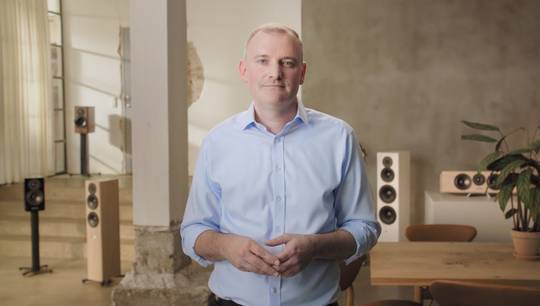
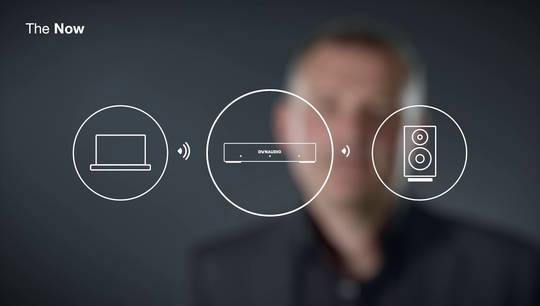
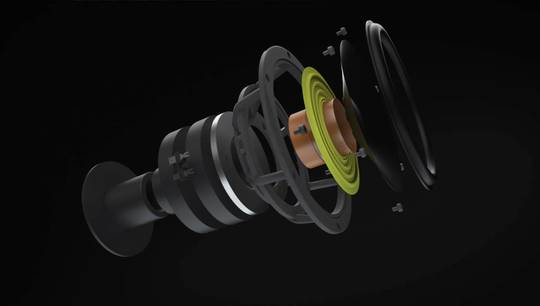
I’m Stephen Entwistle, Chief Engineer for Acoustics at Dynaudio. What is a Dynaudio loudspeaker? It’s much more in line when we have an active speaker because we’re in control of it. When we have a passive speaker, well, it’s a Dynaudio loudspeaker, but… that sound could change depending on any number of different bits of kit that you put in between the loudspeaker and where the audio comes from originally. And these days, consumers want much more convenience, and to be able to just get a pair of speakers, unbox them and plug them in, connect them to your phone to your wireless Internet. And boom! There you go. That’s much more exciting to an end user these days. Very, very early on in the development of this, this was a must win battle for our engineering team. We’re introducing people to what a real hi-fi experience. Just because it’s an active, wireless loudspeaker, it doesn’t take away from it being a real hi-fi experience. And that if they want to... If they enjoy that, and they start to want to do more, then, well, the sky’s the limit then, you know. We’ve kind of rested on our laurels a little bit. You know, we’ve won some good awards with our older products. We’ve had some very well performing products. And what we’ve tried to do with Focus is getting back to that class leading performance. And we do that by caring about everything that we put into the loudspeaker. Basically, the premise was that we would take the existing Focus XD. Where are the significant performance gains to be had? And, I would say the majority of the development went into working on the user experience, actually. The app control, the interaction with all the different streaming services. The interconnection between the loudspeakers. That’s where the bulk of the development has been. That’s been the electronics hardware/software team working very, very hard to build on that platform. So then we’ve got a very good, stable platform for streaming, connectivity and user experience that still delivers a significant upgrade on our existing acoustic performance of the Focus XD. On the acoustic side, it’s been, well, how do we... How do we show off, what we can do? How do we maximize the performance of the loudspeaker? So we’ve been quite heavily involved in selecting the analogue-to-digital converters, the digital-to-analogue converters, the gain staging, the power amplifier selection. Looking at all those kind of key parts, that go into the sound of the loudspeaker. And really optimising that for best sound performance. We did a new method of managing the bass performance where we extend the range of the performance of the closed box cabinet with the DSP So what we’ve done with the rest of the range is we’ve applied that closed box principle, and this bass-extension principle to the whole range, so... All the speakers go much lower than they would if they were a passive cabinet. And we could do that because of the power amplifier that we’ve got, and the DSP that we’ve got, and the fact that we’ve full control of the electro-acoustic system. In some ways... In some ways we do extend the bass response to subwoofer-like low frequencies. And we certainly extend the frequency response into the subwoofer range. So we apply the equalisation curve to flatten out the frequency response of the cabinet. Lower than you would normally expect for a speaker of that size. So what we’ve tried to do with with all the Focus speakers, is present a full range speaker. And we could do that with our DSP, and our novel way of controlling the response at low frequency. So even the Focus 10 will give you a full band performance. We do a lot of objective measurements. But the big thing that we focus on is our subjective analysis of loudspeakers and we do that in a very objective way. It’s not just, ‘Oh yeah, this sounds better.’ We’re always interested in the detail. What is different? Why is it different? All the little minutiae of the subjective experience. And that’s where we that’s where we think our talent is. That’s where we think our performance gains are. We talk about spatial contrast as one of our descriptors in our evaluation of loudspeakers. And what we mean is: the ability to hear the ability to hear the space between the sound sources. And that is an improvement over the old Focus XD. From an engineer’s point of view, it’s much more interesting for me is that we give you, well, this is what Dynaudio think a loudspeaker should be. Because we are... As an engineer, I’m in control of all the audio performance in that chain. So we’ve chosen the DAC. We’ve chosen the amplifier, we’ve chosen how to do all the internal stuff that your pre-amplifier would do. And we’re very deliberate in what choices we make. We can’t go the easy route. We have to go the hard route. And because of all the functionality that we put in the loudspeaker, this becomes very, very complex. So we applied that same dogged determination to everything that’s inside the Focus. And that’s been quite a lot of quite a lot of work. Where do we win? That’s... It’s those kind of decisions that we make. That’s where we win. It definitely represents all the goals that we have in a loudspeaker. But the real difference is that… the level of care and detail that we put into every product at every stage. We really do care about the audio performance of everything that is in that product. And that’s why we win, I think. To be honest.