Academy
Ask the Expert: What's sound beaming?
27,164 views
But what is it? How does it work? And why is it clever?
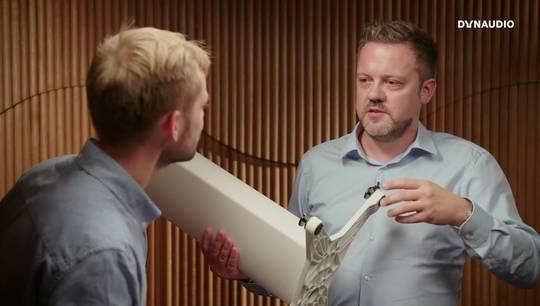
We asked Otto Jørgensen, Product Manager, and Roland Hoffmann, Head of the Dynaudio Academy, those exact questions live on Facebook from the HIGH END Show in Munich, Germany.
Follow Us
► YouTube https://www.youtube.com/user/DynaudioOfficial?sub_confirmation=1
► Facebook https://www.facebook.com/DynaudioGroup
► Twitter https://twitter.com/dynaudio
► Instagram https://instagram.com/dynaudio/
► LinkedIn https://www.linkedin.com/company/dynaudio-as
Find a Dynaudio dealer http://www.dynaudio.com/find-dealer/
Visit http://www.dynaudio.com
View transcript
- Hello, and welcome to to Ask the Expert. My name is Christopher and I'm your host. Today we're live-streaming from the High End show in Munich, Germany. And with me, I have our head of the Dynaudio Academy, Roland Hoffman, and our product manager for Hi-Fi products, Otto Jorgensen. Together with these two we're gonna talk about the topic: Sound beaming, but before we jump into that, I wanna go back a year and talk about what we did the last time we were at the High End show. Because we went live there as well, talking about the Special Forty. So, we're a year down the road, what has happened? - Yeah, that was our anniversary, so we had the Special Forty back then, a complex speaker, and now we make a big change, playing something completely different, but of course now in the background this model we launched today was already in development. - In the making. - So we were really busy while presenting the Special Forty, our engineers were really busy up in Denmark. - And I have to correct you, because we're not launching it we're previewing something rather special. And, as you said we're a year down the road, we've been developing something new, and I think that one of the first questions we got when we opened up was from Udo Holzmann, who asked "Will there be a new Confidence?" So, can either of you maybe reveal a little bit? - Yes, there will be a new Confidence, is that reveal enough? - Yeah, that reveals enough. - Does that answer the question, Udo? - I was told to be short last time, so hopefully that was short enough. - That was short enough, yes. - Let's put that to the side a little bit, I know we're gonna talk more about it, and then jump straight into the topic of today, which is sound beaming. And, Roland, can you start by explaining to us, what is sound beaming? - Sound beaming is something that actually doesn't happen inside the speaker, or inside the drive unit, sound beaming is something that happens when the sound has left the speaker. So it's all about directivity, you know, a loud speaker doesn't beam sound like a torchlight, straight ahead of you, it spreads sound. So what you have when you listen to a loudspeaker in your chair, is you hear a lot of direct sound from the speaker and a lot of sound from the ceiling, the floor, and from the sides; reflections. And sound beaming is really improving that, how the loudspeaker behaves in the room. The best loudspeaker is worth nothing if it only behaves well in the laboratory. If it measures well, well done, but how does it really sound in your place, at home or at Udo's place at home... How does it sound like? And that's really important, how the loudspeaker beams sound and that is all about what happens when the sound leaves the drive units. - And I guess that there's different ways of achieving that, right Otto? - Yeah, in the old Confidence series, we had a very distinctive feature, with two tweeters. We have this symmetric array and in the middle was these two tweeters, that is part of the DDC system. That blends together with the way we did the crossover. So with a very advanced complicated crossover, we made that basically work, so you were steering the sound forward, you had less reflections from floor and ceiling, we still have full discretion to the sides, you really want that to get the imaging right. But we are steering the sound by controlling the tweet arrangement together with the mid-ranges in the crossover. - And when you're doing something like this, I guess it's because we're trying to achieve something, so what is the advantage of having a sound beaming technology, just this DDC? - We're trying to achieve, and we achieve, that there's less sound directed to the ceiling and to the floor. I talked about these reflections that you have, when you're listening to the speakers, it's not only the speakers, it's the room that you're listening to as well. What you really want to hear is the recording. You want to hear if you have a recording from the Carnegie Hall in New York, you want to hear the Carnegie Hall on that recording, and not so much your room. And if you want to have The Beatles on Abbey Road, you want to hear The Beatles on Abbey Road. - You want to experience what it was recorded by. - Exactly, and the thing is, that's on the file, on the CD, or on the Vinyl, it's on there. The room, the ambience, of the recording session is on there, and that's what you want to hear. And the best speakers are not worth much, if you don't have it performing well in the room. It can really smear the imaging and the staging, and you don't really hear, you don't really get, the Abbey Road feeling. - And as you were talking about, it doesn't really matter if it's a good speaker, but only in the laboratory, right? It needs to work everywhere, and I guess that's where sound beaming and DDC comes into play, right? - Yup. - I think that's part of why the original Confidence was very popular, it works in a lot of people's homes, we have a lot of positive feedback from the Confidence. Because, regardless of the home, they get a good sound inside the home. - It takes the room a little bit out of the equation, so to speak, right? - Yeah. - Yeah. So talking about sound beaming, and we've touched upon, DDC, you were talking a bit about what it is, but I was wondering if you could go into more detail with what DDC is, how it works? - When you have the two-tweeter arrangement we had before, you are kind of playing with the phase alignment between the drivers. So, you have a sort of, dispersion from the speaker, you have a sort of lobing, it's called. So right in front of it you have a sound, where you want it to be, and then you have a lobe, where you have no sound, so if you control that correctly, you have the lobing right where you have the reflections towards the floor and ceiling. So you have more sound directed forward. This way of doing it is complicated and has some down sides, but it really works. - And that's because, it's not only that we have two tweeters, but the fact that you have two tweeters means that you have to go in and play around with paths of crossover, right? - Yeah. So, you have to, part of the DDC effect on the C4 and the C2 and the Evidence, has to do with the two tweeters, but also what you do in the crossover. But if you ask a crossover engineer, he wants to have the crossover as pure and simple as possible, with the various components, but as a network, as pure as possible. Which slightly goes a little bit against the DDC, where you try to do something to the signal to acquire, have some sound beaming shaping with two tweeters. So in the ideal world, you would leave the music signal alone in the crossover, and have an acoustic shaping, beaming right at the drive unit, and not so much in the signal. And that's what we do with the DDC and the new generation of DDC. - I think an important point is that we didn't really want to change the concept of DDC. We are working on improving the way we achieve that concept. - And we're talking about that the DDC, the current DDC is something that we use in the Confidence, but I guess we are also using it in other models as well. - Yeah, we have it in the Evidence as well. We have Evidence, Temptation, Platinum, Master, that are very popular products in that category as well. So, that's also very much true for them. - So now we've been looking at what we've had, where we are coming from, right? And I think that if we go back to Udo's original question, "Will there be a new Confidence?" You guys said yes, we've seen it here today. It's a preview, as I mentioned, what does the future of the DDC technology hold in the new Confidence? What does it look like, and where are we going with it? - I think we have to show what it looks like, partly because we don't have the full speaker here, but we have something, that explains what we are doing. Because we can actually visualize it. - If you look at the tweeter front plate we have now for this tweeter, the way it's shaped you can see that it's completely open to the sides. So on the side there's really no wave guide effect. When you have this vertical arrangement when we are steering the sound, first by this tiny shape here, and then by the way it blends out from the tweeter. It really steers the way the sound is reflected up and down and it's not yet only in this faceplate. If you look at the actual baffle this shape continues out into the baffle, part of the baffle is also part of DDC. - So DDC is now the entire baffle instead of just the tweeters? - That's right, it really spreads across the whole baffle. - The DDC is actually not only the tweeter, it's the complete arrangement is the DDC. We call this the DDC lens, this very particular shape from the tweeter and into the baffle. That's the tweeter part of it, you could say. The most interesting thing about it is that now there is only one tweeter, so basically those lobing effect we had before by having two tweeters, and we use that very effectively. Instead of having those lobing effect, we are now steering the sound in the wave guide, which part of that, we can do this, is also a much more power tweeter. So we actually have the same dynamic range as we had before. - And I was actually wanting to ask about, so there's only one tweeter in this faceplate, right? So going from two to one, that's a big step right? - Yes, it is, it gives some advantages. The big task was not to go from two to one, of course, there's a lot of speakers out there with one tweeter, so that's not really the challenge. The challenge is to still have the effects of steering the sound forward and still having it open to the sides. So even steering the sound in some way has been done before in waveguides, but doing it so that it actually works in this way, without side effects, that's the main issue. And that's where Jupiter came in, our measurement room, this is really done by heavy use of Jupiter and the simulations and testing that we can do. That's the only way we were able to do this effectively. - And I know Roland, you've been talking about how Jupiter and a big team of engineers actually came together to move the DDC technology into a new era, so to speak. - Yeah, we have really good engineers, but if you don't have the room to try out the things, the engineers are full of good ideas, but they really need the room, the measurement system, and also the ability to play with all these ideas, without that, without the room, with all the engineers, we wouldn't have this advance. It's not shape that you just come up with, and you take a pencil and you draw this shape, we have countless models, or shapes of this lens which didn't work. Maybe they worked in some areas, and maybe they measured even good, but sound wise, it doesn't work out, or the other way round. So, it sounds okay, but something in the measurement doesn't really work, we can only do that in Jupiter. - And I remember having seen, you know, a lot of different models of this DDC lens. Right, formed in clay and stuff, right? - You would think it's everything about measurements and having the biggest measurement room in Europe, and so on, that solves it, no, we still have a lot of clay models, as you say, to try out things first, to measure things. So it's really the combination out of almost old-fashioned acoustic work, together with high-tech measurement. - You also have to have some fantasy involved in, "how could we do this" I mean, measurement and simulations that doesn't help if you don't know what to simulate on, what to measure on, so you have to first find out, okay, maybe if I cut it like this measure what happens? Oh, didn't work. Okay maybe if I do it like this, maybe that works better. And then, what do we do with that information afterwards. That's really the challenging part, and that's why Jupiter helps, because instead of doing a measurement and two days later you have the result, we can try something out, do the measurement in a few minutes, and then start working on improving it. That really changes how much progress. - There's one great quote from one of our engineers, and we have all of these simulations, really high-tech simulations, but he said, "But sometimes our experience is quicker than all the simulations." So really you have to have both, you have the ability to measure all these things, but sometimes you just need someone who has a bright idea, experience. "I think if we do this, then it should work out well." And then you have the ability to measure that. So it really comes together, but not one without the other. - Definitely. I want to go back to the shape a little bit, because in the start you were talking about that what you were trying to achieve was steering the sound in, you know, the height, not the width of the room, and with the DDC lens, there's obvious the height control here, but to me at least it seems like we managed not to play around with the width of the room. - You know the way hearing works, our ears are placed on either sides of our heads, so we are very sensitive to information that coming on horizontal plane, we are really relying on that for placement of a sound that we're hearing. And when you have two speakers playing, that is creating a virtual sound image where we are trying to pinpoint something, in between the speakers, or even outside the speakers, we really need the reflections from the side walls to make that work. Otherwise our brain won't really interpret it, the way it's supposed to be. On the other hand, the vertical reflections, that is just noise, that confuses the brain, that makes it more difficult to place stuff in the right positions. So that's why you want the side reflections to some degree, but you don't want the floor-ceiling reflections. That's why, when that really comes together, it helps the brain interpret what we're hearing. The brain is a very important part of hearing, so that's just the thing, the physical waves. - And also, these reflections from the ceiling, they have a very short time delay from direct sound. In our brain, it's not so much our ears, is actually too slow to separate that. It cannot really, in most rooms, in a church you can, in a church you can easily, okay that's a really high ceiling. In a living room, our brain cannot do that. Our brain will mix up the direct sound with the reflected sound from the ceiling. It's such a short time delay that our brain, our hearing ability thinks, "Oh, that's one information." But then you end up with a very blurred image of the recording between the speakers, because our brain thinks, "Oh, it's one information" but it's not, and DDC and the lens helps to have less of these reflections in the first place so you don't have to damp the ceiling, you have to have any cushions on the ceiling. You actually have a speaker which directs less sound to that ceiling so you have purer sound information coming from that speaker itself. - And in this whole set up, so it's a baffle, it's a faceplate here, does the tweeter still play a role in creating the DDC? I can see that when I said still that you looked at me like it's never had a thing wrong. - No, I was just going to say yes and no. The soft dome itself, which has been evolved over forty years, you know is very famous for what it is, that is, of course that's where the sound radiates from. So if we change anything about this dome, this whole wave guide system would have to change as well. - Okay. - This is designed specifically for this dome, and specifically for this speaker, to work specifically for those mid-range drivers. So the whole thing comes together. So if you change one thing, we would have to change all the other things as well. So it's all part of one big picture. - Back to Jupiter then. - Yeah, exactly. - Guys I think that we can talk about the new DDC lens for a very long time, but I know Roland, that you have a sound demo coming up, - Yeah, we are demoing the Confidence every hour, and that's really exciting, to prove what we are saying that DDC really gives you this imaging and staging, so that's what we're going to do in the sound demo. - Perfect, and I wanna thank both of you for taking time out of your day here at the event, I know that you have a lot to do, to come and speak with me, and share some insights with our audience and thanks. - Thanks for watching. - Thank you. - And if you are in Munich, if you are at the High End Show, come by our showroom, Roland is demoing the speakers every hour, so come and take a listen. Thank you for watching and thank you for your questions.