Academy
The principle behind a Dynaudio tweeter
56,405 views
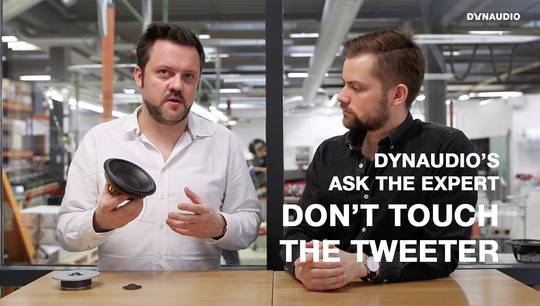
Watch as Roland and Otto discuss different tweeter principles, the rationale behind our own design, and the how the cutting-edge Esotar Forty tweeter compares with the world renown Esotar2.
00:45 - Mike Bannon: What's the general principle behind your soft-dome tweeters? And what are their benefits?
06:17 - E-mail: What's best: the Esotar Forty or Esotar 2?
07:39 - Lagergre: Band vs. dome tweeters? Main acoustic differences?
13:45 - iuri_gitin: How does your LYD tweeters compare with the Esotar tweeters?
Follow Us
► YouTube https://www.youtube.com/user/DynaudioOfficial?sub_confirmation=1
► Facebook https://www.facebook.com/DynaudioGroup
► Twitter https://twitter.com/dynaudio
► Instagram https://instagram.com/dynaudio/
► LinkedIn https://www.linkedin.com/company/dynaudio-as
Find a Dynaudio dealer http://www.dynaudio.com/find-dealer/
Visit http://www.dynaudio.com
View transcript
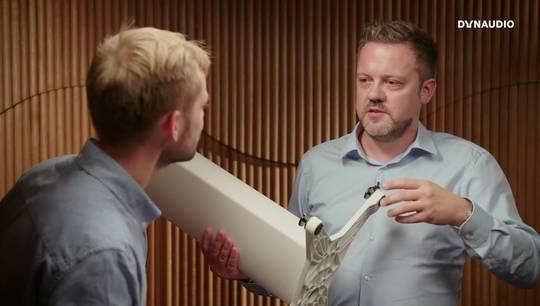
Hello and welcome to our live broadcast from Munich. We are at the High End show, the Annual High End show in Munich. With me for live broadcast I have Roland Hoffman, who is a senior manager at the Dynaudio Academy and we have Otto Jørgensen who is a Product Manager at Dynaudio. Today we are going to talk a little bit about tweeters in general but as you might have seen we've also introduced our new anniversary loudspeaker, the Special Forty. That has a pretty interesting new tweeter from us called the Esotar Forty. But, before we get into all of that Roland. Could you maybe talk a little bit about some of the principles behind how we have made tweeters in the past? Yeah it's a… Basically we use soft dome tweeter. It is a coated soft dome. And there are many different tweeter principles out there in the market. But when I started, we were looking for the right balance out of everything a tweeter should be like… So it should have a light right - Inner damping, it should be light, it should have very fast response but overall it has a very even frequency response and many tweeter principles are good in one of these areas but the coated soft dome by principle is very balanced very good in all these areas. Okay. Is there any particular reason for this, or… Yeah, if you just imagine a piece of metal which makes a metal dome or piece of thin plastic which makes a plastic dome, It has a resonance frequency on its own... Just like… Imagine a piece of thin metal touching it, you would have some sound. Imagine a piece of fabric just like textile. If you touch it, it makes no sounds. Only if you attach a voice coil and a magnet. Then the music signal, it will reduce the sound which by principle is the better way to start with. - Okay... And then we improved it in… Well in 40 years now, so we. So we get better and better and better and we are doing such great soft dome tweeters. And I know that one of our tweeters, the Esotar² or Esotar 2 as it is also called has been celebrated for a long time. Can you talk a little bit about what… What's special about the Esotar²? Basically it is special because it's a very very powerful neodymium magnet. So… And this is not about volume level or that it's louder than others. It's about control - control over the voice coil. The voice coil is a tiny thing and it's in the magnet gap. So this is very light and it should move very accurately very precisely and that you can only achieve with a very strong neodymium magnet. Well not only but... The better the magnet is the stronger the magnet is the better it is controlled and it sounds better. And then we have many many things… We could talk a whole day on our tweeters… It's about the coating, It's about the fabric, it's about the dome shape basically everything. And you cannot achieve that quality level if you just buy tweeters from the supplier. You have to develop and continue improving... And we've done that for forty years now. Building it in-house and developing… Okay so that's kind of where we are at now with tweeters but today we've introduced something brand new. The Special Forty with a new tweeter called the Esotar Forty. And Otto, you've been involved in the development of that. Can you talk a little bit about it? Yes. What we actually did in the Esotar Forty was if you look at Esotar² which is our top of the line tweeter. Compared to this twitter the Esotar Forty the back chamber on the Esotar² is actually a more advanced model. It is an aluminium back chamber, this is a plastic back chamber. So we basically started out with this. But this part is completely different. So we improved a lot of things about this… The… the yoke which is called where the airflow underneath the dome is redesigned so we have a better airflow from the dome backwards. I mean what's actually important is of course the sound coming out of the front. But how to determine the right sound – how to get less distortion. We have to control the sounds that’s coming from behind the dome. So the airflow into the yoke piece is different. But can you maybe just for my sake, explain what you have here... Because you're talking about a yoke but it is the magnet as well or? Yes… Yes of course. If you are looking at this part is actually the neodymium magnet. What's interesting about this is that when you talk about neodymium tweeters from many other companies you might have a very small neodymium because you can make neodymium very small compared to ferrite. So in our tweeters we have a very large neodymium magnet. So for a neodymium magnet this is extremely large especially in a tweeter. So that's the main part of it. And then you have the yoke which is sitting inside this magnet that controls… So that the… that's this piece here? Well that’s actually this metal piece. That controls the airflow - behind the dome to… that it release it into the back chamber. So that we can dampen these sounds coming from the back of the chamber to avoid them to be reflective and coming back up to the dome. That would create distortion. Most magnets are just a magnet ring. But here you can see it has been shaped for airflow so that's really wanted… So that optimizes how the air goes through? - Yeah. This is the main improvement in the Esotar Forty. That is less airflow up that coming behind it. So we are… we have a lower-resonance frequency which again creates less distortion and makes it easier to make it blend together with woofer. So we've got a better sounding mid-range because of this improved airflow. For this particular part of the sound it's actually better than the Esotar². It is an improved version. But then on the Esotar² you have a different back chamber. So you get something that's different. In some areas it's improved, especially in the lower frequencies. Well I think that we're talking about - this might be a little bit better than what we have in Esotar² but the back piece being better in the Esotar²... So for many people I guess the number one question now is well which is better? Can you say that one is better than the other or are they just fundamentally different? No, I would say they are different. They have advantages in different areas. Don't forget that the Esotar² belongs to a higher range for Contour, especially Confidence. Evidence Platinum… That's where the Esotar² is used. So you can say some things are simplified but then you cannot stop our engineers. They came up with ideas to make some parts even better in the Esotar². Not overall but in many details. And then in the end, we have said it's a Special Forty model. So we cannot say. “Uhhm nope, don’t make it so good.” We have to improve. It's our anniversary speaker, it has to be special. So then we came up with this. Esotar Forty, in which some parts are better, some – the Esotar² is the Esotar². And the thing with the Esotar Forty tweeters is that it's exclusive for this particular loudspeaker, right? So it's only in this one model that you can experience it. So it is as special as the Special Forty. - Yes. - Our anniversary tweeter... Guys we also have some… A lot of, we have a lot of questions from people obviously. So I think we should start to dive into some of those. Roland, you have touched briefly upon there being different principles for tweeters right? There is the dome obviously and then there's something called ribbons… Yeah, a ribbon tweeter… and there are many people talking about ribbon tweeter and if you look at a tweeter principle on its own - you will find, as I said many advantages in different principles like the ribbon tweeter. And it's very good on axis and it has some frequency areas where it's actually quite good. But the tweeter is not a loudspeaker. The tweeter is a tweeter. So, first of all, it has to be good On Axis and Off Axis, if you look at the tweeter alone. It has a very good sound radiation, with phase response, with step response, with frequency response. So many things which are principally better overall in a so-called soft dome. Even more important part is there's a twitter and a woofer. They have to be somehow alike, they have to perform together. And a ribbon tweeter would perform perfect with a ripped woofer. There's no such thing. - Yeah. So a ribbon tweeter is good on its own but it will never really have the seamless integration with the woofer because it radiates different. The sound dispersion is different. The on axis, off axis performance completely different in any woofer. So you cannot really make a very balanced overall loud speaker out of that. - OK. And so with the dome tweeter we are able to make the better integration with the woofer. That's what I'm hearing you say right? Yeah especially in the… in the Special Forty. But basically in all our models. Our tweeters can go - reach very very low in the frequency right down to the mid range. Our woofers can… They. - very high up in to the mid-range, So the blend over, the crossover in our tweeters and woofers are exceptionally good. But even the Esotar Forty is even one step further in this regard. To say, the Special Forty is basically a celebration of what we have been good at for forty years and that is specifically this… being being good in all areas. Not just in single areas like high frequency response. We're not looking at good high frequency response. We are looking at best sound over all. - OK... It is because our ears are not just listening in frequency response. Many people don't talk about the frequency response and has to be linear. There are so many different areas where speaker has to perform good. And that's all we can hear so it's not, it's not something to measure right, It is something that has to sound right. That's a different thing. I want to move on to a question that is a bit similar. It's about, you know, trying different materials. It's something we've got in the question before and now it came up again with us asking for more questions. And have we ever tested anything else than... Lets say - the textile dome that we're using at the moment. Well that is in development. We always see lots of prototypes and they are always measuring different stuff and simulating different products, and on the computer systems as well. The basic thing is that we are looking for like in our woofer - We are looking for a material that is stiff and light but also well damped so that you don't have the ringing. We didn't - we haven't found the materials that yet that works better than this for all these three combined where the overall experience of it is better than with this. Again sometimes if you measure stuff you will find the measurement that looks like. “Oh now we made the best tweeter in the world.” But then you start listening to it and, you find that it doesn't actually sound right. That actually means a big part of developing these drivers loudspeakers that you can't measure everything. We have to really listen to it. And in the end we haven't found a better solution yet so that's what we are sticking with. It's also interesting that we have got new engineers fresh from University. And of course they have the same question. And they have other ideas. So we also have to prove that this is the right way to go. So we have to improve as well to make it better to constantly make it better… And so we… I think it's safe to say we convinced. A handful of engineers who thought “I know a fancy material.” And then in the end they admitted. Actually what you doing in Esotar² and Esotar Forty is pretty good. And I guess that and this might be a bit off base but with the new research and developments, obviously we're able to measure a lot but I know that we are very keen on also listening to and spending time combining the two aspects. Right? I mean in the new measurement chamber we can make a full measurement of a loudspeaker in like 20 minutes. Which… which took days before. So it's very easy to make some very nice measurements very quickly. But but actually the listening part takes a lot longer time. We're spending days weeks for listening for the same changes where we just spent 20 minutes measuring the changes. We can't just listen to it in 20 minutes and make decisions. So it still takes a lot of time to find and adjust these things. It helps to have the measurement and to listen. And I guess that in the end, it's all about – well, It's real people with real ears that sit there and listening to the project so it has to sound great there and not necessarily just in a measurement chamber. And the capability to produce our own tweeters. So all the measurement and all the listening would be worth nothing if we then have to find the right twitter in the catalogue. But with this knowledge we can go into our our R&D, and into our production and do prototypes, build prototypes - test out and then in the end make a better tweeter. So it's not just about R&D and listening. In the end, we do our own tweeters and then when it all comes together... And that's why our tweeters are so good. - Great! I want to move on to the final question I have on my… in my little book here. And… It is we have the new the new LYD monitors, right? And someone asked - what's the difference or how does LYD tweeter compare with the Esotar tweeters? Basically the overall concept is the same. We're not changing the concept just because it's an active speaker. So the Esotar is higher range of drivers. We don't use a neodymium magnet in the LYD tweeters. Part of that is because you don't really need the high sensitivity for an active system. But that's not really - I believe the question was also how does it relate to the home speakers. So it's the difference between LYD which is pro speaker compared to our home speakers. There’s not really any difference there. - OK... The job of the tweeter is exactly the same. Whether or not it's in an active speaker or if it's in a pro speaker. The final tuning of the speaker can be somewhat different but the actual driver is basically the same technology. So in our pro line-up we have some models that use lower ranges of tweeters. And some models that use the higher ranges. So we also have pro monitors that use Esotar² and in that case there's no difference at all between the Esotar² in a Contour and an Esotar² in an M3 Pro monitor or M5. It's the same way of developing and the same thing that… From the tweeter point of view it is exactly the same. Also because all the things that a coated soft dome does well in a home, in a listening room or living room, it also counts in the studio. People in the studio, they have to listen for hours and hours and hour. It is their work. But basically someone at home also likes to listen for hours to their favorite music. So everything like a very balanced frequency response, very balanced sound radiation into the room is as important in a living room as it is in a studio. So it's basically… Or not basically that's maybe... putting it too strong but it's similar… And I have said that we have… It sounds like now we have only a few tweeters. Some for Pro and some for home and sometimes the same… Actually we have over… How many different tweeters we have? Over 20 different tweeters... Not counting all the ones we did in the past. So a lot of different tweeters. We can basically change so many things like the length of the voice coil, the size of the magnet, the shape of the magnet, is it neodymium or ferrite or ferrite plus… There are many many things we can change and we do so from model to model. And it depends on what our goal is… And on what we need for this specific speaker. So yes there's the difference between the models but that difference is not based on whether or not it's a Pro Model. Sometimes if you have a near field monitor like the LYD is designed for. There are things that you don't have to take into account. You don't need as much output in a near field monitor because you're sitting close to the speaker. So ultimate SPL sound pressure is not really as important as if you are making a big three-way home speaker that's designed to go into big living rooms where you are sitting far away from the speaker. Your compromises might be different but the basic technology is the same concept. Guys I can see that the time is running out. So I think that there's only one thing left to say and that’s thanks for joining us for this live session. It was a pleasure having you all here. I hope you enjoyed it as well. - Yeah. - Yeah. And I thank all of you for asking fantastic questions. Thanks for watching...